You have a 50% rating for PTSD. A 30% rating for a back injury. A 10% rating for tinnitus.
So your combined disability rating should be 90%, right?
Wrong.
According to the VA, you are rated at 65% — which rounds down to 60%.
Welcome to VA math.
If that feels like you just got cheated out of money you earned, you are not alone. VA math confuses and frustrates veterans every single day. But once you understand exactly how it works, you can make smarter decisions about your claims — and figure out whether you are being rated accurately.
This guide breaks down the VA’s combined rating formula step by step, with real examples, so there are no more surprises.
Why the VA Does Not Just Add Up Your Percentages
The VA uses a system called the whole person method to calculate combined disability ratings. The core idea behind it is this: the VA treats your body as a single unit representing 100% capacity. Each disability reduces that capacity — but it can only reduce what remains, not the whole thing again.
Think of it like stacking discounts on a purchase. A 50% discount followed by a 30% discount does not give you 80% off. It gives you 65% off — because the second discount applies to the already-reduced price.
The VA applies the same logic to your body.
This method was not designed to punish veterans. It was designed on the theory that you cannot be more than 100% disabled. But in practice, it consistently produces combined ratings significantly lower than veterans expect — and lower than many arguably deserve.
How VA Math Works — Step by Step
Here is the exact formula the VA uses:
Step 1: List all your service-connected disabilities from highest to lowest percentage.
Step 2: Start with 100% — your “whole person.”
Step 3: Apply your highest-rated disability first. Subtract it from 100%.
Step 4: Apply your next disability to the remaining percentage — not to 100%.
Step 5: Repeat for each additional condition.
Step 6: Add all the disability values together to get your combined raw percentage.
Step 7: Round to the nearest 10% increment. If the result ends in 1–4, round down. If it ends in 5–9, round up.
VA Math Example — Three Conditions
Let’s walk through a real example with three conditions:
PTSD: 50%
Back injury: 30%
Tinnitus: 10%
Step 1: Start with 100% whole person.
Step 2: Apply 50% PTSD.
50% of 100% = 50 points of disability
Remaining whole person: 100 − 50 = 50% remaining
Step 3: Apply 30% back injury to the remaining 50%.
Let’s try a simpler example that surprises a lot of veterans:
Knee injury: 40%
Sleep apnea: 50%
Step 1: Start with 100% whole person.
Step 2: Apply the higher rating first — 50% sleep apnea.
50% of 100% = 50 points
Remaining: 50% remaining
Step 3: Apply 40% knee injury to remaining 50%.
40% of 50% = 20 points
Remaining: 30% remaining
Step 4: Add disability points:
50 + 20 = 70% combined
Step 5: Round to nearest 10%.
70% stays at 70%
A veteran with a 50% and 40% rating ends up at 70% combined — not 90%.
VA Math Quick Reference Table
Here is a reference for common two-condition combinations so you can quickly see what to expect:
Condition 1
Condition 2
What You’d Expect
What VA Math Gives You
50%
50%
100%
75% → rounds to 80%
50%
30%
80%
65% → rounds to 70%
60%
40%
100%
76% → rounds to 80%
70%
30%
100%
79% → rounds to 80%
40%
20%
60%
52% → rounds to 50%
30%
20%
50%
44% → rounds to 40%
Notice how two conditions that seem like they should add up to 100% almost never do. This is exactly why veterans consistently feel their combined ratings are lower than they should be — because mathematically, they are.
VA math is the formula — but the formula only works correctly if all your conditions are on the table.
If you have service-connected conditions you never filed for, the VA cannot include them in the calculation. If your existing ratings are lower than your symptoms warrant, the formula produces a lower result. If secondary conditions — like back pain caused by a knee injury, or sleep apnea caused by PTSD — were never claimed, they are not part of the math.
The formula itself is not the only problem. What goes into the formula matters just as much.
This is why veterans with what appears to be a straightforward collection of conditions still end up underrated — the inputs are incomplete.
If you want to understand whether your current combined rating accurately reflects your conditions, theFree Disability Review at VA.org walks through your full picture and helps identify what may be missing.
The Bottom Line
VA math is real, it is not intuitive, and it almost always produces a lower combined rating than you would expect by simply adding up your percentages.
Understanding how it works puts you in a better position to:
Know whether your current rating makes sense
Identify which additional conditions are worth filing for
Understand how close you are to the next rating tier
Make informed decisions about rating increase claims
If you have questions about your specific situation,AI Joe — VA.org’s free 24/7 veteran specialist chatbot — can walk you through your options in plain language, any time of day.
VA.org is an independent, privately owned platform. We are not affiliated with or endorsed by the U.S. Department of Veterans Affairs. All tools on VA.org are 100% free.
Benefit amounts and rating examples shown are approximate figures for 2026. Actual combined ratings may vary based on bilateral factors, special monthly compensation, and other VA-specific rules. Always verify your rating at VA.gov or with a VA-accredited claims agent.
You do not need to do this math manually. VA.org built a free tool that does it for you in seconds.
TheVA Disability Rating Estimator lets you enter all your service-connected conditions and get an instant estimate of your combined rating — using the same whole person formula the VA uses.
It takes about two minutes. No sign-up required.
If your estimated combined rating looks higher than what the VA has on file for you, that is worth investigating. You may be missing conditions, secondary disabilities, or have grounds for a rating increase.
Start with aFree Disability Review to get a more in-depth look at what you might be leaving on the table.
When VA Math Results in an Inaccurate Rating
VA math is the formula — but the formula only works correctly if all your conditions are on the table.
If you have service-connected conditions you never filed for, the VA cannot include them in the calculation. If your existing ratings are lower than your symptoms warrant, the formula produces a lower result. If secondary conditions — like back pain caused by a knee injury, or sleep apnea caused by PTSD — were never claimed, they are not part of the math.
The formula itself is not the only problem. What goes into the formula matters just as much.
This is why veterans with what appears to be a straightforward collection of conditions still end up underrated — the inputs are incomplete.
If you want to understand whether your current combined rating accurately reflects your conditions, theFree Disability Review at VA.org walks through your full picture and helps identify what may be missing.
The Bottom Line
VA math is real, it is not intuitive, and it almost always produces a lower combined rating than you would expect by simply adding up your percentages.
Understanding how it works puts you in a better position to:
Know whether your current rating makes sense
Identify which additional conditions are worth filing for
Understand how close you are to the next rating tier
Make informed decisions about rating increase claims
If you have questions about your specific situation,AI Joe — VA.org’s free 24/7 veteran specialist chatbot — can walk you through your options in plain language, any time of day.
VA.org is an independent, privately owned platform. We are not affiliated with or endorsed by the U.S. Department of Veterans Affairs. All tools on VA.org are 100% free.
Benefit amounts and rating examples shown are approximate figures for 2026. Actual combined ratings may vary based on bilateral factors, special monthly compensation, and other VA-specific rules. Always verify your rating at VA.gov or with a VA-accredited claims agent.
Yes — but with diminishing returns.
Every additional service-connected condition you add will increase your combined rating, but the increases get smaller the higher your existing combined rating is. This is because each new condition is applied to an ever-smaller “remaining” whole person percentage.
Here is what that looks like:
Starting at 80% combined with 20% remaining
Adding a 30% condition: 30% of 20% = 6 more points → combined becomes 86% → rounds to 90%
Adding another 10% condition: 10% of 14% = 1.4 more points → combined becomes 87.4% → still rounds to 90%
That said — even if an additional condition does not change your final rounded rating, it still matters. It establishes a record of the condition in your VA file, which matters for future increases, TDIU claims, and other benefits.
How to Calculate Your Own Combined Rating
You do not need to do this math manually. VA.org built a free tool that does it for you in seconds.
TheVA Disability Rating Estimator lets you enter all your service-connected conditions and get an instant estimate of your combined rating — using the same whole person formula the VA uses.
It takes about two minutes. No sign-up required.
If your estimated combined rating looks higher than what the VA has on file for you, that is worth investigating. You may be missing conditions, secondary disabilities, or have grounds for a rating increase.
Start with aFree Disability Review to get a more in-depth look at what you might be leaving on the table.
When VA Math Results in an Inaccurate Rating
VA math is the formula — but the formula only works correctly if all your conditions are on the table.
If you have service-connected conditions you never filed for, the VA cannot include them in the calculation. If your existing ratings are lower than your symptoms warrant, the formula produces a lower result. If secondary conditions — like back pain caused by a knee injury, or sleep apnea caused by PTSD — were never claimed, they are not part of the math.
The formula itself is not the only problem. What goes into the formula matters just as much.
This is why veterans with what appears to be a straightforward collection of conditions still end up underrated — the inputs are incomplete.
If you want to understand whether your current combined rating accurately reflects your conditions, theFree Disability Review at VA.org walks through your full picture and helps identify what may be missing.
The Bottom Line
VA math is real, it is not intuitive, and it almost always produces a lower combined rating than you would expect by simply adding up your percentages.
Understanding how it works puts you in a better position to:
Know whether your current rating makes sense
Identify which additional conditions are worth filing for
Understand how close you are to the next rating tier
Make informed decisions about rating increase claims
If you have questions about your specific situation,AI Joe — VA.org’s free 24/7 veteran specialist chatbot — can walk you through your options in plain language, any time of day.
VA.org is an independent, privately owned platform. We are not affiliated with or endorsed by the U.S. Department of Veterans Affairs. All tools on VA.org are 100% free.
Benefit amounts and rating examples shown are approximate figures for 2026. Actual combined ratings may vary based on bilateral factors, special monthly compensation, and other VA-specific rules. Always verify your rating at VA.gov or with a VA-accredited claims agent.
If you have service-connected disabilities affecting both sides of your body — both knees, both arms, both ears — the VA applies a bilateral factor before calculating your combined rating.
Here is how it works:
The VA first combines the ratings for the paired conditions using VA math
They then add 10% of that combined value as a bonus
That adjusted number gets folded into your overall combined rating
Example:
Right knee: 20%
Left knee: 10%
Combined bilateral rating = 28% → add 10% of 28% = 2.8 → bilateral total ≈ 30.8%
That adjusted bilateral figure then gets treated as one rating entry in your overall combined calculation.
Veterans with multiple bilateral conditions — both knees, both shoulders, hearing loss in both ears — often have a higher combined rating than they realize once the bilateral factor is properly applied.
Does Adding More Conditions Always Help?
Yes — but with diminishing returns.
Every additional service-connected condition you add will increase your combined rating, but the increases get smaller the higher your existing combined rating is. This is because each new condition is applied to an ever-smaller “remaining” whole person percentage.
Here is what that looks like:
Starting at 80% combined with 20% remaining
Adding a 30% condition: 30% of 20% = 6 more points → combined becomes 86% → rounds to 90%
Adding another 10% condition: 10% of 14% = 1.4 more points → combined becomes 87.4% → still rounds to 90%
That said — even if an additional condition does not change your final rounded rating, it still matters. It establishes a record of the condition in your VA file, which matters for future increases, TDIU claims, and other benefits.
How to Calculate Your Own Combined Rating
You do not need to do this math manually. VA.org built a free tool that does it for you in seconds.
TheVA Disability Rating Estimator lets you enter all your service-connected conditions and get an instant estimate of your combined rating — using the same whole person formula the VA uses.
It takes about two minutes. No sign-up required.
If your estimated combined rating looks higher than what the VA has on file for you, that is worth investigating. You may be missing conditions, secondary disabilities, or have grounds for a rating increase.
Start with aFree Disability Review to get a more in-depth look at what you might be leaving on the table.
When VA Math Results in an Inaccurate Rating
VA math is the formula — but the formula only works correctly if all your conditions are on the table.
If you have service-connected conditions you never filed for, the VA cannot include them in the calculation. If your existing ratings are lower than your symptoms warrant, the formula produces a lower result. If secondary conditions — like back pain caused by a knee injury, or sleep apnea caused by PTSD — were never claimed, they are not part of the math.
The formula itself is not the only problem. What goes into the formula matters just as much.
This is why veterans with what appears to be a straightforward collection of conditions still end up underrated — the inputs are incomplete.
If you want to understand whether your current combined rating accurately reflects your conditions, theFree Disability Review at VA.org walks through your full picture and helps identify what may be missing.
The Bottom Line
VA math is real, it is not intuitive, and it almost always produces a lower combined rating than you would expect by simply adding up your percentages.
Understanding how it works puts you in a better position to:
Know whether your current rating makes sense
Identify which additional conditions are worth filing for
Understand how close you are to the next rating tier
Make informed decisions about rating increase claims
If you have questions about your specific situation,AI Joe — VA.org’s free 24/7 veteran specialist chatbot — can walk you through your options in plain language, any time of day.
VA.org is an independent, privately owned platform. We are not affiliated with or endorsed by the U.S. Department of Veterans Affairs. All tools on VA.org are 100% free.
Benefit amounts and rating examples shown are approximate figures for 2026. Actual combined ratings may vary based on bilateral factors, special monthly compensation, and other VA-specific rules. Always verify your rating at VA.gov or with a VA-accredited claims agent.
After the VA calculates your combined raw percentage, they round it to the nearest 10%:
Raw combined of 54% → rounds down to 50%
Raw combined of 55% → rounds up to 60%
Raw combined of 64% → rounds down to 60%
Raw combined of 65% → rounds up to 70%
This rounding rule means the difference between a 54% and 55% combined rating is an entire rating tier — and hundreds of dollars per month.
If your raw combined percentage sits just below a rounding threshold, adding even a small secondary condition — a 10% tinnitus rating, for example — can push you over the line and bump your final rating up by a full tier.
How Bilateral Conditions Affect Your Rating
If you have service-connected disabilities affecting both sides of your body — both knees, both arms, both ears — the VA applies a bilateral factor before calculating your combined rating.
Here is how it works:
The VA first combines the ratings for the paired conditions using VA math
They then add 10% of that combined value as a bonus
That adjusted number gets folded into your overall combined rating
Example:
Right knee: 20%
Left knee: 10%
Combined bilateral rating = 28% → add 10% of 28% = 2.8 → bilateral total ≈ 30.8%
That adjusted bilateral figure then gets treated as one rating entry in your overall combined calculation.
Veterans with multiple bilateral conditions — both knees, both shoulders, hearing loss in both ears — often have a higher combined rating than they realize once the bilateral factor is properly applied.
Does Adding More Conditions Always Help?
Yes — but with diminishing returns.
Every additional service-connected condition you add will increase your combined rating, but the increases get smaller the higher your existing combined rating is. This is because each new condition is applied to an ever-smaller “remaining” whole person percentage.
Here is what that looks like:
Starting at 80% combined with 20% remaining
Adding a 30% condition: 30% of 20% = 6 more points → combined becomes 86% → rounds to 90%
Adding another 10% condition: 10% of 14% = 1.4 more points → combined becomes 87.4% → still rounds to 90%
That said — even if an additional condition does not change your final rounded rating, it still matters. It establishes a record of the condition in your VA file, which matters for future increases, TDIU claims, and other benefits.
How to Calculate Your Own Combined Rating
You do not need to do this math manually. VA.org built a free tool that does it for you in seconds.
TheVA Disability Rating Estimator lets you enter all your service-connected conditions and get an instant estimate of your combined rating — using the same whole person formula the VA uses.
It takes about two minutes. No sign-up required.
If your estimated combined rating looks higher than what the VA has on file for you, that is worth investigating. You may be missing conditions, secondary disabilities, or have grounds for a rating increase.
Start with aFree Disability Review to get a more in-depth look at what you might be leaving on the table.
When VA Math Results in an Inaccurate Rating
VA math is the formula — but the formula only works correctly if all your conditions are on the table.
If you have service-connected conditions you never filed for, the VA cannot include them in the calculation. If your existing ratings are lower than your symptoms warrant, the formula produces a lower result. If secondary conditions — like back pain caused by a knee injury, or sleep apnea caused by PTSD — were never claimed, they are not part of the math.
The formula itself is not the only problem. What goes into the formula matters just as much.
This is why veterans with what appears to be a straightforward collection of conditions still end up underrated — the inputs are incomplete.
If you want to understand whether your current combined rating accurately reflects your conditions, theFree Disability Review at VA.org walks through your full picture and helps identify what may be missing.
The Bottom Line
VA math is real, it is not intuitive, and it almost always produces a lower combined rating than you would expect by simply adding up your percentages.
Understanding how it works puts you in a better position to:
Know whether your current rating makes sense
Identify which additional conditions are worth filing for
Understand how close you are to the next rating tier
Make informed decisions about rating increase claims
If you have questions about your specific situation,AI Joe — VA.org’s free 24/7 veteran specialist chatbot — can walk you through your options in plain language, any time of day.
VA.org is an independent, privately owned platform. We are not affiliated with or endorsed by the U.S. Department of Veterans Affairs. All tools on VA.org are 100% free.
Benefit amounts and rating examples shown are approximate figures for 2026. Actual combined ratings may vary based on bilateral factors, special monthly compensation, and other VA-specific rules. Always verify your rating at VA.gov or with a VA-accredited claims agent.
The Rounding Rule — Where Veterans Lose or Gain
After the VA calculates your combined raw percentage, they round it to the nearest 10%:
Raw combined of 54% → rounds down to 50%
Raw combined of 55% → rounds up to 60%
Raw combined of 64% → rounds down to 60%
Raw combined of 65% → rounds up to 70%
This rounding rule means the difference between a 54% and 55% combined rating is an entire rating tier — and hundreds of dollars per month.
If your raw combined percentage sits just below a rounding threshold, adding even a small secondary condition — a 10% tinnitus rating, for example — can push you over the line and bump your final rating up by a full tier.
How Bilateral Conditions Affect Your Rating
If you have service-connected disabilities affecting both sides of your body — both knees, both arms, both ears — the VA applies a bilateral factor before calculating your combined rating.
Here is how it works:
The VA first combines the ratings for the paired conditions using VA math
They then add 10% of that combined value as a bonus
That adjusted number gets folded into your overall combined rating
Example:
Right knee: 20%
Left knee: 10%
Combined bilateral rating = 28% → add 10% of 28% = 2.8 → bilateral total ≈ 30.8%
That adjusted bilateral figure then gets treated as one rating entry in your overall combined calculation.
Veterans with multiple bilateral conditions — both knees, both shoulders, hearing loss in both ears — often have a higher combined rating than they realize once the bilateral factor is properly applied.
Does Adding More Conditions Always Help?
Yes — but with diminishing returns.
Every additional service-connected condition you add will increase your combined rating, but the increases get smaller the higher your existing combined rating is. This is because each new condition is applied to an ever-smaller “remaining” whole person percentage.
Here is what that looks like:
Starting at 80% combined with 20% remaining
Adding a 30% condition: 30% of 20% = 6 more points → combined becomes 86% → rounds to 90%
Adding another 10% condition: 10% of 14% = 1.4 more points → combined becomes 87.4% → still rounds to 90%
That said — even if an additional condition does not change your final rounded rating, it still matters. It establishes a record of the condition in your VA file, which matters for future increases, TDIU claims, and other benefits.
How to Calculate Your Own Combined Rating
You do not need to do this math manually. VA.org built a free tool that does it for you in seconds.
TheVA Disability Rating Estimator lets you enter all your service-connected conditions and get an instant estimate of your combined rating — using the same whole person formula the VA uses.
It takes about two minutes. No sign-up required.
If your estimated combined rating looks higher than what the VA has on file for you, that is worth investigating. You may be missing conditions, secondary disabilities, or have grounds for a rating increase.
Start with aFree Disability Review to get a more in-depth look at what you might be leaving on the table.
When VA Math Results in an Inaccurate Rating
VA math is the formula — but the formula only works correctly if all your conditions are on the table.
If you have service-connected conditions you never filed for, the VA cannot include them in the calculation. If your existing ratings are lower than your symptoms warrant, the formula produces a lower result. If secondary conditions — like back pain caused by a knee injury, or sleep apnea caused by PTSD — were never claimed, they are not part of the math.
The formula itself is not the only problem. What goes into the formula matters just as much.
This is why veterans with what appears to be a straightforward collection of conditions still end up underrated — the inputs are incomplete.
If you want to understand whether your current combined rating accurately reflects your conditions, theFree Disability Review at VA.org walks through your full picture and helps identify what may be missing.
The Bottom Line
VA math is real, it is not intuitive, and it almost always produces a lower combined rating than you would expect by simply adding up your percentages.
Understanding how it works puts you in a better position to:
Know whether your current rating makes sense
Identify which additional conditions are worth filing for
Understand how close you are to the next rating tier
Make informed decisions about rating increase claims
If you have questions about your specific situation,AI Joe — VA.org’s free 24/7 veteran specialist chatbot — can walk you through your options in plain language, any time of day.
VA.org is an independent, privately owned platform. We are not affiliated with or endorsed by the U.S. Department of Veterans Affairs. All tools on VA.org are 100% free.
Benefit amounts and rating examples shown are approximate figures for 2026. Actual combined ratings may vary based on bilateral factors, special monthly compensation, and other VA-specific rules. Always verify your rating at VA.gov or with a VA-accredited claims agent.
If your VA disability rating feels lower than it should be — you’re probably right.
Every year, thousands of veterans walk away from the VA system underrated. Not because they exaggerated their conditions. Not because they did something wrong. But because the VA disability system is complicated, the paperwork is exhausting, and nobody handed you a guide when you separated.
The good news? Your rating is not set in stone. You can file for an increase. You can claim conditions you missed. And you can get the monthly compensation you actually earned.
This guide breaks down exactly how VA disability ratings work, why so many veterans end up underrated, and what concrete steps you can take right now.
What Is a VA Disability Rating?
A VA disability rating is a percentage assigned by the Department of Veterans Affairs that reflects how much your service-connected conditions affect your ability to work and live your daily life.
Ratings go from 0% to 100% in increments of 10. The higher your rating, the more tax-free monthly compensation you receive.
Here is what the monthly compensation looks like in 2026:
Rating
Monthly Payment (Approx.)
10%
~$175/month
30%
~$524/month
50%
~$1,102/month
70%
~$1,716/month
100%
~$3,831/month
That gap between a 50% and 70% rating is more than $600 every single month — tax free. Over a year, that is over $7,000. Over a decade, that is more than $70,000.
If your rating is even one tier lower than it should be, you are leaving real money on the table every month.
How VA Disability Ratings Are Calculated
Here is where most veterans get confused — and where the system works against you if you do not understand it.
Single condition ratings
If you have one service-connected condition, the VA assigns a single percentage based on the severity of that condition. A 30% rating for PTSD, for example, means the VA has determined that your PTSD moderately affects your occupational and social functioning.
Combined ratings — the “VA math” problem
If you have multiple service-connected conditions, the VA does not simply add your percentages together. They use a method called the whole person formula — which almost always produces a lower number than you would expect.
Here is how it works:
Start with 100% — your whole body
Apply your highest-rated condition first. Say it is 50%. That leaves 50% remaining.
Apply your next condition (say 30%) to the remaining 50% — not to 100%. So 30% of 50% = 15%.
Your combined total is now 65%, which rounds down to 60%
A veteran with a 50% condition and a 30% condition ends up rated at 60% — not 80%.
This is called VA math. It consistently produces lower combined ratings than veterans expect, and it is one of the main reasons so many veterans are undercompensated.
Want to see your estimated combined rating right now? Use the freeVA Disability Rating Estimator at VA.org. Enter your conditions and get an instant estimate — no sign-up required.
6 Reasons Your VA Disability Rating May Be Too Low
1. You only claimed your most obvious condition
This is the most common mistake veterans make. You filed for your knee injury and stopped there. But what about tinnitus from combat noise exposure? Sleep apnea linked to your PTSD? Migraines from a TBI? Each condition you did not claim is compensation you are not receiving.
2. Your C&P exam did not reflect your worst days
The Compensation and Pension (C&P) exam is one of the most critical steps in the VA rating process — and one of the most misunderstood. Many veterans show up to their C&P exam, minimize their symptoms out of habit, and walk out underrepresented in the official record. The VA examiner sees you once. If you had a good day, your file may not reflect how your condition actually affects your life.
3. You never filed for secondary conditions
A secondary service-connected condition is one that was caused or aggravated by an existing service-connected condition. These are ratable separately — and most veterans have no idea this is an option.
Examples:
Knee injury → altered gait → hip or back pain → separate rating
PTSD → sleep apnea → separate rating
Diabetes (service-connected) → peripheral neuropathy → separate rating
Every secondary condition you have not filed for is a missed rating opportunity.
4. Your condition has gotten worse
VA disability ratings are not permanent. If your service-connected condition has worsened since your original rating was assigned, you can file for an increase with new medical evidence. Many veterans assume that once a rating is set, it cannot change. It can — and it should if your health has declined.
5. Your nexus letter was weak or missing
A nexus letter is a statement from a medical professional connecting your current condition to your military service. It is often the difference between a claim being approved and denied. Without a strong nexus letter, the VA has less evidence to rate you accurately.
6. You did not know about TDIU
Total Disability Individual Unemployability (TDIU) is a benefit that allows veterans rated at 60% or higher — or 70% or higher with one condition at 40%+ — to receive compensation at the 100% rate if their service-connected conditions prevent them from maintaining substantially gainful employment.
If your disabilities prevent you from holding a steady job, you may qualify for full 100% compensation even without a 100% rating. This is one of the most underused benefits in the entire VA system.
You do not need a lawyer. You do not need to pay anyone. Here is the process:
Step 1 — Gather your evidence
Collect all relevant medical records, doctor statements, buddy statements from fellow veterans or family members who can attest to how your condition affects your daily life, and your own personal statement describing your worst-day symptoms.
Step 2 — Choose the right filing path
There are three options depending on your situation:
Supplemental Claim — if you have new and relevant evidence that was not considered in your original decision
Higher-Level Review — if you believe the VA made an error in your existing claim (no new evidence needed)
New Claim — if you are adding a condition you never filed for
Step 3 — File VA Form 21-526EZ
This is the standard disability compensation application. You can file online at VA.gov, by mail, or in person at a VA regional office. Filing with a VSO (Veterans Service Organization) is free and they can help you submit a stronger claim.
Step 4 — Prepare for your C&P exam
If the VA schedules a C&P exam, attend it. Describe your worst symptoms, not your average day. Bring a written summary of how your condition affects your work, sleep, relationships, and daily activities. Do not minimize.
Step 5 — Follow up and appeal if needed
VA claims can take several months to process. Check your claim status regularly. If you receive a decision you disagree with, you have one year from the decision date to file an appeal.
What to Do Right Now
Not sure what conditions to claim? Not sure if your current rating is accurate?
Start with two free tools at VA.org:
VA Disability Rating Estimator — enter your service-connected conditions and get an instant estimate of your combined rating. Takes about 2 minutes. No sign-up required.
Free Disability Review — a more in-depth review that walks through your full situation and helps identify conditions and secondary disabilities you may have missed.
Both tools are 100% free. VA.org is not affiliated with the U.S. Department of Veterans Affairs — we are an independent platform built specifically to help veterans like you get the benefits you earned.
If you have questions about your specific situation,AI Joe — our free 24/7 veteran specialist chatbot — can walk you through your options in plain language.
The Bottom Line
Your VA disability rating is not final. The VA makes mistakes. Conditions get missed. Evidence gets overlooked. And the system was not designed to make this easy.
But you have options. You can file for an increase. You can claim secondary conditions. You can appeal decisions. And you can get the monthly compensation that reflects what your service actually cost you.
VA.org is an independent, privately owned platform. We are not affiliated with or endorsed by the U.S. Department of Veterans Affairs. All tools on VA.org are 100% free.
Benefit amounts shown are approximate figures for 2026. Actual amounts depend on dependent status and other factors. Always verify current rates at VA.gov.
For students interested in healthcare, science, technology, and research, the Department of Veterans Affairs offers unique opportunities to gain real-world experience while contributing to projects that improve veteran care. VA research programs allow students and early-career professionals to work alongside experienced researchers, physicians, and healthcare teams on initiatives that directly impact veterans and their families.
VA has a long history of medical innovation. Research conducted through VA programs has contributed to major healthcare advancements and continues to support the development of new treatments, technologies, and care strategies for veterans. Many VA researchers also provide direct patient care, allowing them to connect research efforts with real-world healthcare needs.
Students can participate in several programs that provide valuable hands-on experience:
Research internships
STEM-focused fellowships
Clinical research opportunities
Student volunteer programs
Data science training initiatives
Graduate and undergraduate research positions
Programs such as the Big Data Scientist Training Enhancement Program (BD-STEP), Advanced Platform Technology Center opportunities, and various VA internship initiatives help students develop practical skills while working on meaningful projects. These programs expose participants to emerging healthcare technologies, data science applications, rehabilitation research, and veteran-focused healthcare solutions.
Benefits of participating in VA research include:
Hands-on experience with healthcare innovation
Mentorship from experienced clinicians and researchers
Exposure to clinical trials and research studies
Opportunities to strengthen graduate school applications
Career development in healthcare and science fields
For students considering careers in medicine, nursing, data science, engineering, or healthcare administration, VA research programs provide valuable experience while supporting a mission that improves veteran health outcomes nationwide.
Veterans often face a complicated system when trying to understand benefits, healthcare options, disability claims, education programs, and housing assistance. Finding reliable information can take time, and many veterans aren’t always sure where to begin.
That’s where AI Joe comes in.
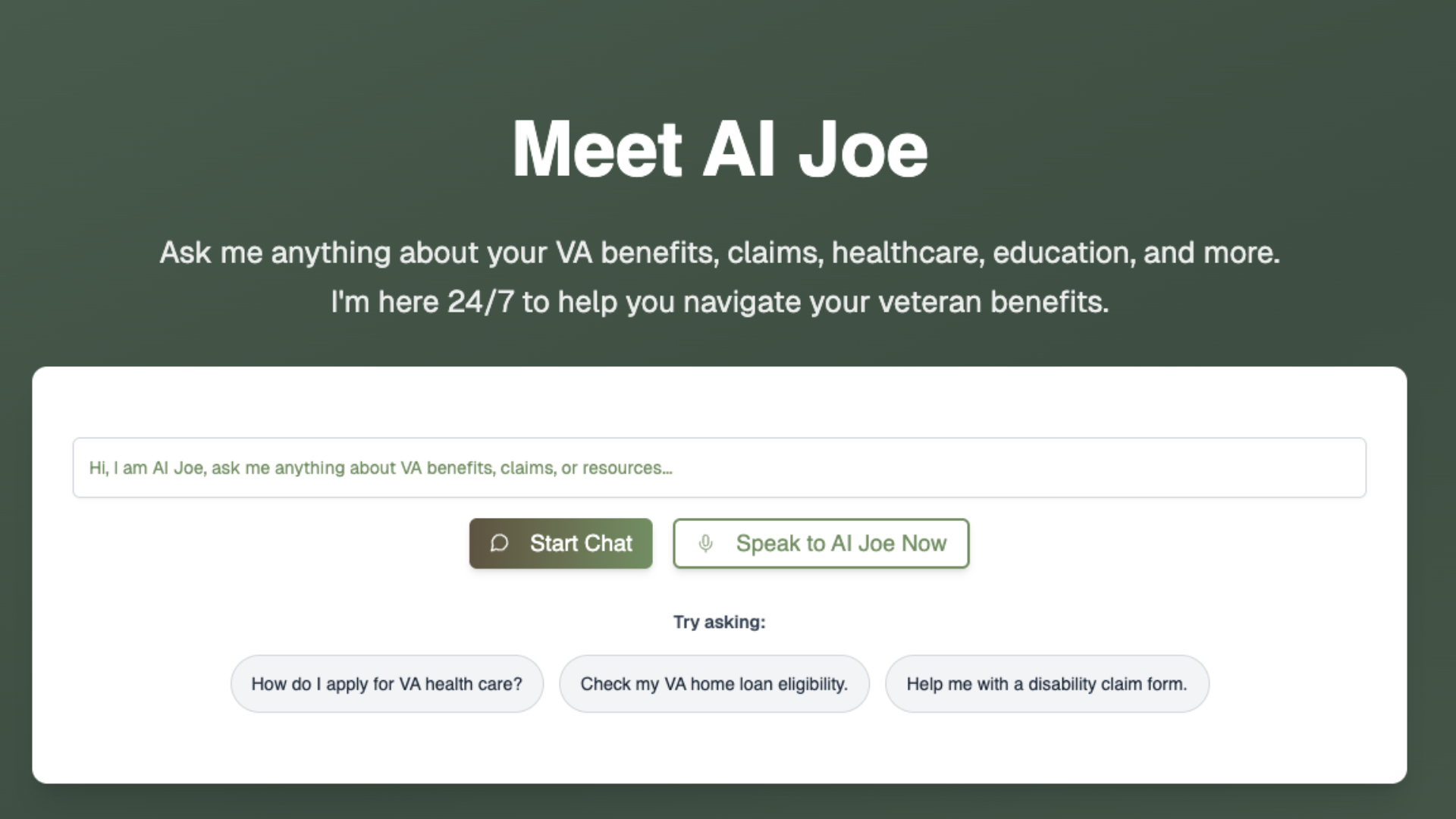
AI Joe is an AI-powered veteran support assistant available through VA.org. Designed specifically for veterans and their families, AI Joe helps answer common questions related to benefits, claims, healthcare, education, home loans, and other veteran resources. The goal is simple: make it easier for veterans to get information without spending hours searching through multiple websites and documents.
Unlike traditional search tools, AI Joe provides conversational guidance. Veterans can ask questions in plain language and receive responses designed to be easier to understand. Whether someone wants to learn about healthcare enrollment, disability benefits, education opportunities, or home loan eligibility, AI Joe helps point them in the right direction.
One of the biggest advantages is accessibility. AI Joe is available 24 hours a day, seven days a week. Veterans can ask questions whenever they need help without waiting for business hours or appointments.
VA.org developed AI Joe as part of its mission to simplify the benefits process and make veteran support more accessible. The platform combines AI-powered guidance with educational resources designed specifically for the veteran community.
For many veterans, navigating benefits can feel overwhelming. AI Joe helps reduce confusion by providing quick answers, helpful explanations, and guidance toward relevant resources.
Technology cannot replace personalized professional advice, but it can help veterans get started faster and feel more confident about the next steps in their journey.
As more healthcare services become available online, protecting personal health information has become increasingly important for veterans. The Department of Veterans Affairs continues encouraging veterans to take proactive steps to safeguard their health records, online accounts, and sensitive personal information.
Cybercriminals frequently target personal data because it can be used for identity theft, fraud, and unauthorized access to financial or healthcare information. Veterans who use online healthcare portals should remain aware of common cybersecurity risks and best practices.
Simple actions can significantly improve online security:
Use strong, unique passwords
Enable multi-factor authentication
Avoid sharing login credentials
Monitor account activity regularly
Keep devices updated
Be cautious of phishing emails and scams
Only access healthcare information through trusted websites
The VA has continued improving account security through secure login systems and identity verification processes designed to help protect veteran information online. Veterans are encouraged to use trusted authentication services when accessing government resources.
Healthcare records contain highly sensitive information, making them valuable targets for cybercriminals. Taking preventive measures can help reduce the risk of unauthorized access and protect personal privacy.
Veterans should also be cautious when receiving unexpected emails, text messages, or phone calls requesting account information. Legitimate government agencies rarely ask for sensitive information through unsolicited communications.
As digital healthcare continues expanding, cybersecurity awareness remains an important part of protecting both personal information and healthcare access.
By adopting simple online safety habits, veterans can better protect their data while continuing to take advantage of convenient digital healthcare services.
Veterans continue to play an important role in America’s economy, bringing valuable leadership experience, discipline, and problem-solving abilities to businesses of every size. According to VA Secretary Doug Collins, military service equips veterans with skills that often translate directly into success in entrepreneurship, business ownership, and civilian careers.
Many veterans leave military service with years of experience leading teams, managing resources, making critical decisions under pressure, and adapting to changing environments. These qualities are highly sought after in today’s competitive business landscape.
Military service also teaches individuals how to operate effectively in complex situations while maintaining focus on objectives and outcomes. These experiences can provide a strong foundation for launching businesses, managing organizations, and leading employees.
Across the country, veteran-owned businesses continue contributing billions of dollars to the economy while creating jobs and serving local communities. Many entrepreneurs credit their military training with helping them develop the confidence and leadership skills necessary to succeed in business.
Veterans also benefit from a growing number of resources designed specifically for entrepreneurs, including mentorship programs, small business development assistance, networking opportunities, and educational resources.
As more veterans transition into civilian careers, the skills developed through military service remain a significant advantage that can help drive long-term professional success.
Whether starting a new company, managing a team, or pursuing a corporate career, veterans continue proving that the lessons learned through service can create lasting opportunities beyond the military.
Veterans increasingly have access to important government services online, and Social Security is no exception. Through a secure “my Social Security” account, veterans can manage benefits, access records, and complete important tasks without visiting a local office.
The online platform allows users to securely view information, update personal records, and access important documents from any internet-connected device. Whether a veteran is still working, transitioning from military service, or already retired, online services can simplify benefit management.
Veterans already receiving Social Security benefits can:
These tools help veterans plan financially while reducing paperwork and office visits. Online access is available around the clock, making it easier for individuals balancing work schedules, education programs, military obligations, or family responsibilities.
Social Security also provides information specifically tailored to veterans, including guidance related to disability benefits, retirement planning, and programs available to wounded service members.
As government services continue moving online, digital tools are becoming an increasingly important way for veterans to manage benefits efficiently and stay informed about future financial planning opportunities.
Mental healthcare remains one of the most important components of overall veteran wellbeing. From stress and anxiety to PTSD, depression, adjustment challenges, and emotional recovery, mental health services help veterans improve quality of life and strengthen long-term wellness.
The Department of Veterans Affairs continues expanding mental health resources, research programs, telehealth services, crisis intervention support, and treatment options designed specifically for veterans and their families.
Mental healthcare is not only focused on crisis situations. Many services are designed to support daily wellbeing, emotional resilience, healthy relationships, stress management, and successful transitions into civilian life.
The VA’s broader Whole Health approach also emphasizes treating the whole person rather than focusing only on medical conditions. This includes attention to emotional, social, physical, and personal wellbeing goals.
Mental health professionals continue encouraging veterans to seek support early rather than waiting until challenges become overwhelming. Accessing care is increasingly viewed as a sign of strength and proactive self-care rather than weakness.
Research continues showing that veterans who connect with mental health resources often experience improved healthcare engagement, stronger recovery outcomes, and greater long-term stability.
As veteran support systems continue evolving, mental healthcare remains a critical foundation for helping veterans build healthier, more connected, and more fulfilling lives.
For veterans navigating stress, recovery, or major life transitions, access to mental health support can make a meaningful difference in overall wellbeing.
Navigating veteran benefits can sometimes feel overwhelming, especially when dealing with healthcare, disability claims, home loans, education benefits, and paperwork all at once.
AI Joe was created to make that process easier.
Available through VA.org, AI Joe is an AI-powered veteran support assistant designed to help veterans get faster answers to common questions related to benefits, claims, healthcare resources, housing support, and more.
Instead of searching through multiple websites or waiting for office hours, veterans can ask questions directly and receive immediate informational guidance.
One of the biggest advantages of AI-powered support is accessibility. Veterans can access guidance anytime without needing appointments or long wait times.
For many veterans, quick access to information helps reduce stress and confusion when navigating complicated systems.
Digital support tools are becoming increasingly important as more veterans seek faster and more convenient ways to access information online.
While AI Joe does not replace official legal or medical advice, it can provide veterans with a simpler starting point for understanding available resources and next steps.
As AI technology continues improving, tools like AI Joe are helping make veteran support more accessible, responsive, and user-friendly.
Finding answers about VA benefits and veteran services can often feel overwhelming, especially when veterans are dealing with disability claims, healthcare questions, education benefits, or housing concerns at the same time.
AI Joe was created to simplify that experience.
AI Joe is an AI-powered veteran support assistant available through VA.org that helps veterans get faster answers to common questions related to benefits, healthcare, disability ratings, education programs, home loans, and more.
Instead of searching through multiple websites or trying to understand complicated documents, veterans can ask questions directly and receive easy-to-understand guidance in real time.
The goal is not to replace professional support services, but to improve access to information and reduce confusion.