Tag: Veteran benefits

  • Why Veterans Should Take Advantage of Online Social Security Services

    Why Veterans Should Take Advantage of Online Social Security Services

    Veterans increasingly have access to important government services online, and Social Security is no exception. Through a secure “my Social Security” account, veterans can manage benefits, access records, and complete important tasks without visiting a local office. 

    The online platform allows users to securely view information, update personal records, and access important documents from any internet-connected device. Whether a veteran is still working, transitioning from military service, or already retired, online services can simplify benefit management. 

    Veterans already receiving Social Security benefits can:

    • Update direct deposit information
    • Change mailing addresses
    • Download SSA-1099 tax forms
    • Access benefit verification letters
    • Manage account details online

    Veterans who are not yet receiving benefits can:

    • Apply for benefits online
    • Track application status
    • Review retirement benefit estimates
    • Access spouse benefit projections
    • Request proof of non-benefit status

    These tools help veterans plan financially while reducing paperwork and office visits. Online access is available around the clock, making it easier for individuals balancing work schedules, education programs, military obligations, or family responsibilities. 

    Social Security also provides information specifically tailored to veterans, including guidance related to disability benefits, retirement planning, and programs available to wounded service members. 

    As government services continue moving online, digital tools are becoming an increasingly important way for veterans to manage benefits efficiently and stay informed about future financial planning opportunities.


  • 2026 BAH Calculator Helps Veterans Estimate Housing Allowance More Easily

    2026 BAH Calculator Helps Veterans Estimate Housing Allowance More Easily

    Understanding housing allowance can be confusing for many veterans and military families, especially when rates vary depending on location and eligibility.

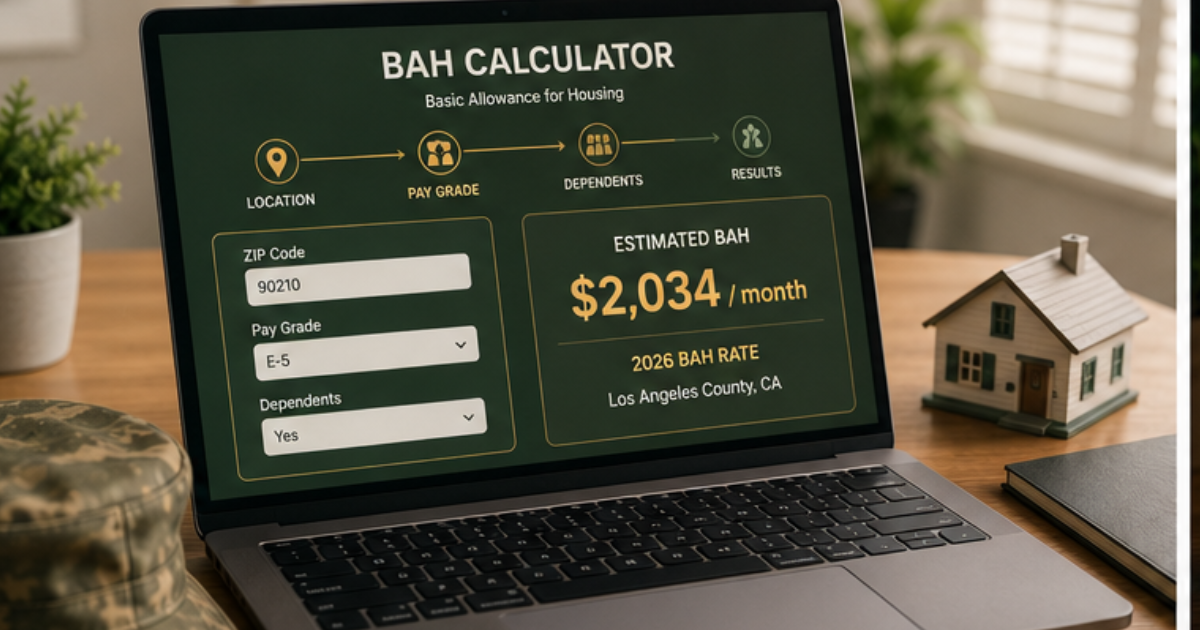
    The 2026 BAH Calculator on VA.org helps simplify this process by allowing users to estimate potential housing allowance based on factors like ZIP code, pay grade, and dependency status.

    Basic Allowance for Housing (BAH) is intended to help cover housing expenses when government housing is unavailable. For veterans using education benefits such as the Post-9/11 GI Bill, housing payments are often tied to local BAH rates.

    Housing support amounts can vary significantly between cities and states because calculations are based on local rental market conditions and military pay structures.


    The calculator helps users:

    • estimate monthly housing allowance
    • compare regional housing differences
    • understand GI Bill housing support
    • improve budgeting and financial planning
    • prepare for relocation or education expenses

    For many veterans, having a clear estimate can reduce uncertainty and make financial planning easier before moving, attending school, or changing housing arrangements.

    As housing costs continue fluctuating nationwide, tools that improve transparency and planning can help veterans make more informed financial decisions.

    The BAH Calculator provides a faster and simpler way to understand what housing support may look like before making major life decisions.


  • VA Disability Rating Estimator: How Veterans Can Better Understand Their Benefits

    VA Disability Rating Estimator: How Veterans Can Better Understand Their Benefits

    Understanding VA disability ratings can be confusing for many veterans, especially when multiple conditions, percentages, and compensation factors are involved.

    The VA Disability Rating Estimator helps simplify that process by giving veterans a clearer idea of how disability percentages may impact benefits and compensation. 

    A disability rating is used by the Department of Veterans Affairs to determine the severity of service-connected conditions and calculate compensation eligibility. Ratings typically range from 0% to 100%, and even small percentage changes can significantly affect monthly payments and additional benefits.

    Many veterans are unsure whether their current rating accurately reflects their condition. Others may not understand how combined ratings work when multiple conditions are involved.

    This is where estimation tools become useful.

    The estimator provides veterans with a more organized way to explore possible ratings and understand how certain conditions may affect overall compensation.

    Benefits of using the estimator may include:

    • clearer understanding of disability percentages
    • improved awareness of compensation levels
    • better preparation before filing claims
    • increased confidence during benefit planning
    • easier understanding of combined ratings

    For many veterans, the biggest challenge is uncertainty. Having access to educational tools and estimates can reduce confusion and help veterans make more informed decisions regarding their benefits.

    The estimator is not intended to replace official VA decisions, but it can serve as a helpful starting point for veterans seeking clarity about their disability benefits.


  • 2026 BAH Calculator Guide: How Veterans and Service Members Can Estimate Housing Allowance

    2026 BAH Calculator Guide: How Veterans and Service Members Can Estimate Housing Allowance

    Housing costs can vary dramatically depending on where you live, which is why understanding your housing allowance is important for veterans, active-duty service members, and students using education benefits.

    The 2026 BAH Calculator on VA.org helps estimate monthly housing allowance based on location, pay grade, and dependency status. 

    Basic Allowance for Housing (BAH) is designed to help eligible military members cover housing expenses when government housing is not provided. The amount depends mainly on:

    • duty station or ZIP code
    • pay grade
    • dependency status
    • local housing market rates 

    For many veterans using the Post-9/11 GI Bill, housing payments are often referred to as “BAH,” although the VA officially calls it Monthly Housing Allowance (MHA). The amount is generally based on the Department of Defense BAH rate for an E-5 with dependents tied to the school or training location. 

    This makes estimating benefits especially important for veterans planning education, relocation, or housing expenses.

    The VA.org BAH Calculator simplifies this process by allowing users to estimate their monthly and annual housing allowance quickly using a ZIP code or city selection. 

    The calculator can help veterans:

    • estimate monthly housing support
    • compare allowance differences by location
    • understand the impact of dependency status
    • better plan budgets and living expenses
    • estimate GI Bill housing support 

    Another important factor is annual updates. BAH rates are typically adjusted each year based on housing market data, which means allowances can change depending on rental trends and local costs. 

    For veterans using GI Bill benefits, understanding rate-of-pursuit requirements and online learning rules is also important because those factors can affect housing payments. 

    Instead of guessing what your housing support might look like, tools like the 2026 BAH Calculator provide a faster and more organized way to estimate benefits before making important financial decisions.

    For veterans planning education, relocation, or future housing expenses, having a clear estimate can help reduce uncertainty and improve long-term planning.


  • VA Disability Rates 2026: Updated Compensation Charts & Monthly Payments

    VA Disability Rates 2026: Updated Compensation Charts & Monthly Payments

    Each year, many Veterans check whether their disability compensation will change — and in 2026, updated VA disability rates continue to reflect adjustments tied to inflation and economic conditions. Understanding how these rates work can help Veterans plan financially and better understand what their disability percentage really means.

    While compensation tables may look complicated at first glance, the system follows a structured process based on disability ratings, dependents, and cost-of-living adjustments.

    What Changed in VA Disability Rates for 2026?

    For 2026, VA disability payments increased due to a cost-of-living adjustment (COLA). This yearly adjustment helps ensure that benefits keep pace with rising living expenses. The updated rates took effect at the end of 2025 and began appearing in Veterans’ payments starting January 2026. 

    Across all disability levels, compensation amounts saw a modest rise — around a few dollars for lower ratings and over one hundred dollars monthly for higher ratings. 

    For example, a Veteran with a 100% disability rating without dependents saw an increase of roughly $107 per month compared to the previous year. 

    These updates happen automatically, meaning Veterans do not need to reapply or submit additional paperwork to receive the adjusted payment.

    How VA Disability Compensation Is Calculated

    VA disability compensation isn’t a single flat payment. Instead, the amount depends on several factors:

    • Your combined disability rating (from 0% to 100%)

    • The severity of service-connected conditions

    • Whether you have a spouse, children, or dependent parents

    Higher disability ratings generally lead to higher monthly payments because they reflect a greater impact on daily life and earning ability. 

    Even small percentage changes can significantly affect the final payment amount, especially when dependents are included in the calculation.

    Why the Annual Increase Matters

    Although some years bring larger adjustments than others, the yearly rate update plays an important role in maintaining long-term financial stability for Veterans. A COLA increase helps benefits maintain their purchasing power as costs for housing, healthcare, and everyday essentials change over time.

    For 2026, the adjustment was moderate compared to earlier years, but it still ensures compensation remains aligned with broader economic trends. 

    This consistency is especially important for Veterans relying on disability compensation as a primary or supplemental source of income.

    Understanding Payment Differences by Rating

    Many Veterans are surprised to learn how compensation scales across different ratings. Even a small jump — such as moving from 60% to 70% — can result in a noticeable increase in monthly payments.

    For example:

    • A Veteran at 70% disability saw an increase of roughly $49 per month compared to 2025 rates. 

    • Veterans rated 10% or 20% received smaller but still meaningful adjustments. 

    Because the VA combines multiple conditions using a unique formula, reviewing how ratings are calculated can help Veterans better understand where they stand.

    What Veterans Should Watch in 2026

    Even though the updated compensation rates are already in effect, Veterans should continue monitoring their disability status and any VA notifications. Changes to medical conditions, new claims, or dependency updates can affect payment amounts throughout the year.

    Keeping medical documentation organized and understanding how ratings work can help prevent confusion when benefits change.

    For those unsure about their current rating or how it compares to updated payment tables, reviewing official compensation charts or using estimation tools can provide helpful clarity.

    Final Thoughts

    The 2026 VA disability rates reflect ongoing efforts to keep Veteran compensation aligned with economic realities while maintaining a consistent structure based on disability severity and family status. While the yearly adjustment may seem small on paper, it plays an important role in ensuring long-term stability.

    By understanding how ratings, COLA increases, and dependency factors influence payments, Veterans can approach their benefits with greater confidence and awareness.


  • VA Form 10 Explained: How Veterans Enroll in VA Health Care

    VA Form 10 Explained: How Veterans Enroll in VA Health Care

    For many Veterans, accessing VA health care begins with a single but important step — enrollment. While VA medical benefits are widely discussed, the process of getting started can feel unclear, especially for Veterans who have never applied before or who assume they are not eligible. VA Form 10, officially known as VA Form 10-10EZ, is the application used to enroll in VA health care. Understanding what this form does, who should complete it, and what happens afterward can help Veterans make informed decisions about their care.

    What Is VA Form 10?

    VA Form 10-10EZ is the official application Veterans use to request enrollment in the VA health care system. Submitting this form allows the Department of Veterans Affairs to review a Veteran’s service history, financial details, and eligibility factors to determine access to VA medical benefits. Completing the form does not obligate a Veteran to use VA health care services. Instead, it establishes eligibility and creates the option to access care when needed.

    Who Should Apply for VA Health Care?

    Many Veterans mistakenly believe VA health care is only for those with service-connected disabilities. In reality, eligibility extends to a broader group. Veterans may consider applying if they:

    • Served on active duty and were discharged under conditions other than dishonorable
    • Have never enrolled in VA health care before
    • Experienced changes in income, family status, or health
    • Were previously denied but believe their circumstances have changed

    Even Veterans with private insurance may still qualify for VA care, either as a primary provider or as supplemental coverage.

    What Information Does VA Form 10 Collect?

    VA Form 10 requests information that helps the VA assess eligibility and assign a priority group. This includes:

    • Military service and discharge details
    • Household income and dependents
    • Insurance coverage, if any
    • Contact and residency information

    Providing accurate and complete information is important, as errors or omissions can delay processing or affect eligibility determinations.

    How to Apply Using VA Form 10

    Veterans can submit VA Form 10-10EZ in several ways:

    • Online through the VA’s official enrollment system
    • By mail using a printed form
    • In person at a VA medical center

    Applying online is often the fastest method, but Veterans may choose whichever option feels most comfortable. Assistance is also available at VA facilities for those who need help completing the form.

    What Happens After You Apply?

    Once the application is submitted, the VA reviews the information and determines eligibility. Veterans are then placed into a VA priority group, which helps determine access to services and potential cost responsibilities such as copayments. After approval, Veterans receive confirmation of enrollment and can begin scheduling appointments at VA medical facilities. Processing times may vary depending on application volume and individual circumstances.

    Understanding Priority Groups

    VA health care operates on a priority group system, which considers factors such as:

    • Service-connected disability rating
    • Income level
    • Military awards or special service status

    Priority groups help the VA manage resources and ensure care is delivered efficiently. A Veteran’s group assignment may change if income or health status changes over time.

    Why Enrollment Matters — Even If You Don’t Need Care Now

    Some Veterans delay enrollment because they feel healthy or already have private insurance. However, enrolling early can be beneficial. Once enrolled, Veterans can access care more quickly if health needs arise and avoid delays caused by starting the process later. Enrollment also establishes a relationship with the VA health care system, making it easier to coordinate care in the future.

    Final Thoughts

    VA Form 10 is more than just paperwork — it is the gateway to VA health care benefits. By understanding how the form works and who should apply, Veterans can make informed decisions about their health and well-being. Enrollment does not require immediate use of services, but it creates options and peace of mind. For Veterans considering VA health care, completing VA Form 10 is a practical first step.