Tag: va benefits

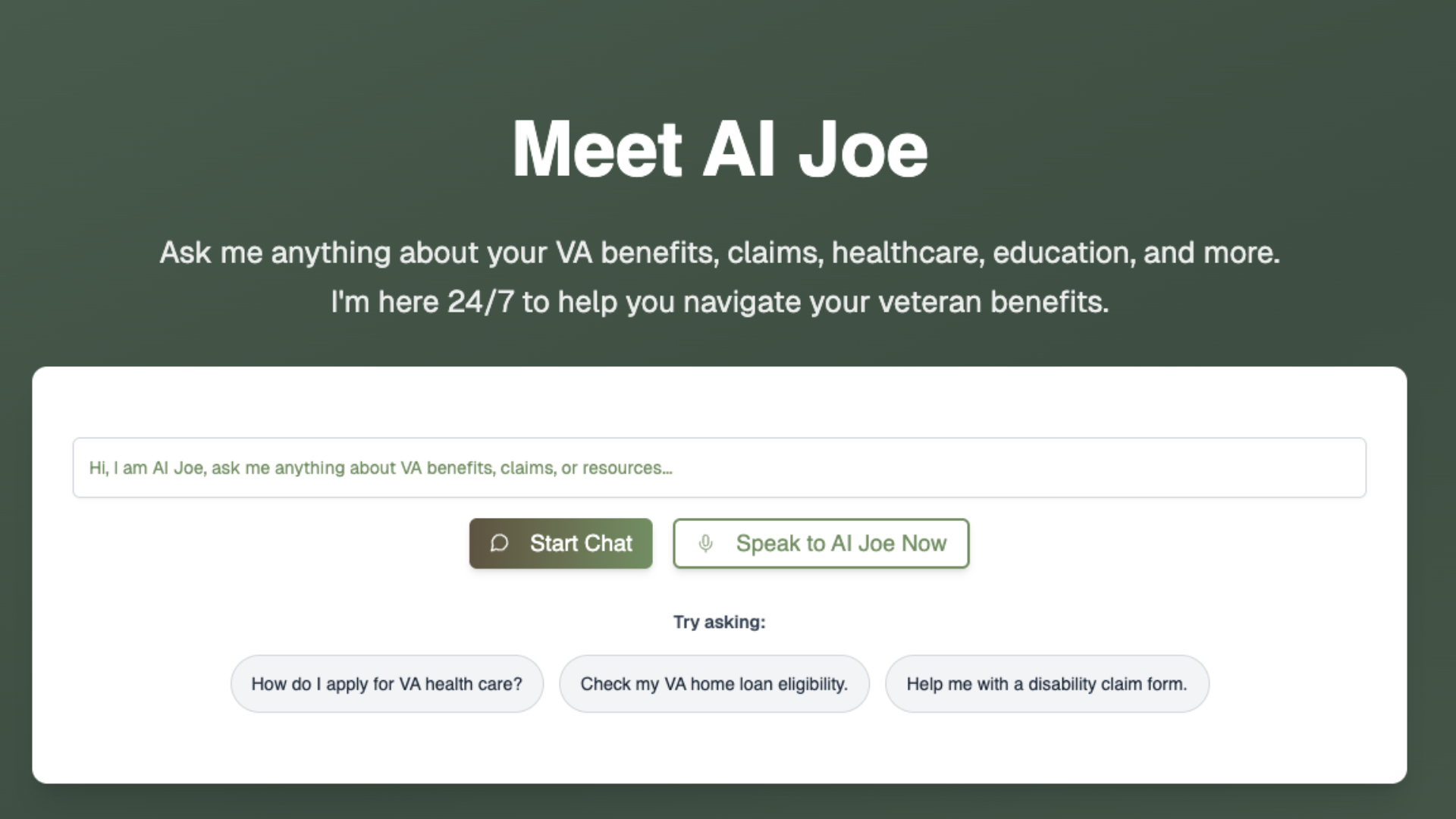
  • Meet AI Joe: The AI-Powered Veteran Specialist Available Anytime

    Meet AI Joe: The AI-Powered Veteran Specialist Available Anytime

    Navigating veteran benefits can sometimes feel overwhelming, especially when dealing with healthcare, disability claims, home loans, education benefits, and paperwork all at once.

    AI Joe was created to make that process easier.

    Available through VA.org, AI Joe is an AI-powered veteran support assistant designed to help veterans get faster answers to common questions related to benefits, claims, healthcare resources, housing support, and more.

    Instead of searching through multiple websites or waiting for office hours, veterans can ask questions directly and receive immediate informational guidance.

    AI Joe can help users:

    • understand disability-related questions
    • explore healthcare resources
    • learn about home loan guidance
    • find educational support information
    • access benefit-related tools and resources

    One of the biggest advantages of AI-powered support is accessibility. Veterans can access guidance anytime without needing appointments or long wait times.

    For many veterans, quick access to information helps reduce stress and confusion when navigating complicated systems.

    Digital support tools are becoming increasingly important as more veterans seek faster and more convenient ways to access information online.

    While AI Joe does not replace official legal or medical advice, it can provide veterans with a simpler starting point for understanding available resources and next steps.

    As AI technology continues improving, tools like AI Joe are helping make veteran support more accessible, responsive, and user-friendly.


  • VA Home Loans Wizard Helps Veterans Navigate the Home Buying Process

    VA Home Loans Wizard Helps Veterans Navigate the Home Buying Process

    Buying a home is one of the biggest financial decisions many veterans will make, but understanding the VA home loan process can sometimes feel confusing.

    From eligibility requirements to paperwork and lender preparation, there are multiple steps involved before purchasing a home.

    The VA Home Loans Wizard was designed to simplify that process.

    The tool helps veterans better understand how VA-backed home loans work and provides structured guidance to make the home buying journey easier to navigate.

    VA home loans offer several advantages compared to traditional mortgage options, including competitive rates and reduced upfront requirements for eligible veterans. Many veterans may also qualify for additional support depending on disability status and service history.

    The VA Home Loans Wizard can help veterans:

    • understand basic eligibility requirements
    • prepare for the loan process
    • identify important documentation
    • explore next steps for buying or refinancing
    • better organize home buying decisions

    One of the biggest challenges veterans face is uncertainty about where to begin.

    Having a step-by-step guide helps reduce confusion and gives veterans more confidence during the process.

    For veterans considering purchasing a home, refinancing, or exploring available housing benefits, tools like the VA Home Loans Wizard can provide a more organized starting point and improve overall understanding of available options.


  • Meet AI Joe: The AI-Powered Veteran Specialist Available 24/7

    Meet AI Joe: The AI-Powered Veteran Specialist Available 24/7

    Finding answers about VA benefits and veteran services can often feel overwhelming, especially when veterans are dealing with disability claims, healthcare questions, education benefits, or housing concerns at the same time.

    AI Joe was created to simplify that experience.

    AI Joe is an AI-powered veteran support assistant available through VA.org that helps veterans get faster answers to common questions related to benefits, healthcare, disability ratings, education programs, home loans, and more.

    Instead of searching through multiple websites or trying to understand complicated documents, veterans can ask questions directly and receive easy-to-understand guidance in real time.

    The goal is not to replace professional support services, but to improve access to information and reduce confusion.

    AI Joe can help veterans:

    • understand benefit-related questions
    • learn about disability support tools
    • explore VA home loan guidance
    • find forms and educational resources
    • receive quick informational support 24/7

    One of the biggest advantages is accessibility. Veterans can use AI Joe anytime without waiting for office hours or callbacks.

    For many veterans, getting quick guidance helps reduce stress and improves confidence when navigating complex systems.

    As digital tools continue evolving, AI-powered support assistants like AI Joe are helping make veteran support faster, simpler, and easier to access.


  • VA Benefits Scorecard: A Smarter Way for Veterans to Understand Their Benefits

    VA Benefits Scorecard: A Smarter Way for Veterans to Understand Their Benefits

    Many veterans know they have benefits available, but not everyone fully understands what they currently qualify for or where gaps may exist.

    The VA Benefits Scorecard is designed to help veterans gain a clearer overview of their benefits position in a simple and organized way.

    Understanding benefits can sometimes feel overwhelming because multiple programs, ratings, eligibility requirements, and support systems may apply at the same time.

    The scorecard helps simplify that experience by offering a structured overview that encourages veterans to better understand their current situation.

    Potential areas covered may include:

    • disability-related benefits
    • education and GI Bill support
    • healthcare eligibility
    • housing-related assistance
    • overall benefits awareness

    For many veterans, uncertainty creates hesitation. They may not know whether they qualify for certain programs or whether their current benefits fully reflect their needs.

    A scorecard approach provides a starting point for understanding where things stand.

    This can help veterans feel more informed before making decisions related to claims, healthcare, education, or future planning.

    The goal is not just information—it’s clarity.

    By helping veterans better understand their benefits picture, tools like the VA Benefits Scorecard can reduce confusion and encourage more confident decision-making.


  • Do You Qualify for Additional VA Education Benefits? What Veterans Should Know

    Do You Qualify for Additional VA Education Benefits? What Veterans Should Know

    Some veterans may be eligible for additional VA education benefits depending on their service history, benefit usage, and program qualifications. Recent guidance from the Department of Veterans Affairs has helped clarify how certain veterans may access extended or additional education support beyond what they originally expected. 

    VA education programs can sometimes be complex, especially for veterans who have served during multiple qualifying periods or used different benefit programs over time. In certain situations, veterans may qualify for additional months of benefits under separate GI Bill programs.

    Understanding eligibility is important because education benefits can help cover tuition, training, housing support, certification programs, and career development opportunities.

    The VA encourages veterans to review their current education benefit status and understand how various programs may apply to their individual circumstances.

    Potential benefits may include:

    • additional months of GI Bill eligibility
    • tuition and training support
    • housing allowance assistance
    • career certification programs
    • education planning resources 

    For many veterans, the challenge is not eligibility itself—it’s understanding the rules surrounding different programs and how prior benefit usage affects future access.

    As education costs continue to rise, maximizing available benefits can significantly reduce financial stress and improve long-term career opportunities.

    Veterans considering school, training, or career advancement programs may benefit from reviewing their eligibility carefully to avoid leaving benefits unused.


  • What Is the VA 5 Year Rule?

    What Is the VA 5 Year Rule?

    For many Veterans receiving disability compensation, one common concern is whether their rating can be reduced over time. The VA 5 year rule is one of several protections designed to help provide stability — but it’s often misunderstood.

    Simply put, this rule limits when and how the Department of Veterans Affairs can lower a disability rating after it has remained in place for five years. Understanding how it works can help Veterans feel more confident about their benefits and know what to expect moving forward.

    Understanding the VA 5 Year Rule

    The VA 5 year rule applies when a disability rating has been continuously in effect for at least five years. After that point, the VA must meet a higher standard before reducing the rating. This doesn’t mean a reduction is impossible, but it does mean the VA must show clear and sustained improvement in the Veteran’s condition.

    Before any change can happen, the VA typically reviews medical records, examinations, and treatment history. A single improvement or short-term change is usually not enough. Instead, the VA looks for consistent evidence that the condition has genuinely improved under ordinary life conditions.

    This added layer of review helps prevent sudden rating reductions based on temporary improvements or incomplete medical information.

    Why the Rule Exists

    Disability ratings are meant to reflect long-term health conditions that affect a Veteran’s daily life. Many injuries or illnesses fluctuate over time, and symptoms can vary from month to month.

    The 5 year rule helps protect Veterans from frequent reassessments or unexpected changes that could create financial instability. By requiring stronger evidence before lowering a rating, the VA aims to balance fair evaluations with consistency for those receiving benefits.

    For Veterans, this means that once a rating has remained stable for five years, there is generally more security built into the process.

    When Can the VA Reduce a Rating?

    Even with the 5 year rule in place, reductions can still happen in certain situations. The VA may consider lowering a rating if medical examinations show sustained improvement that is likely to continue in everyday conditions — not just during a single appointment.

    For example, if long-term treatment leads to significant improvement and medical records consistently reflect that progress, the VA may review whether the current rating still matches the level of disability.

    However, Veterans are usually notified before any reduction takes effect. This gives them the opportunity to respond, submit additional medical evidence, or request a hearing if needed.

    How the VA 5 Year Rule Fits With Other Protections

    The 5 year rule is just one part of a broader system designed to protect disability ratings. Other guidelines, such as the 10 year and 20 year rules, provide additional layers of protection depending on how long a Veteran has held a rating.

    Together, these rules help create a structured framework that balances ongoing evaluations with long-term stability. Knowing where your rating stands within these timelines can make it easier to understand your rights and responsibilities.

    Why Understanding the Rule Matters

    Many Veterans worry about unexpected benefit changes, especially if they receive a notice for a re-evaluation exam. Learning how the VA 5 year rule works can ease some of that uncertainty.

    Instead of assuming that every review means a reduction is coming, Veterans can focus on understanding the process and staying informed about their medical records. Keeping documentation organized and attending scheduled examinations can also help ensure that the VA has a complete picture of a Veteran’s condition.

    Final Thoughts

    The VA 5 year rule is designed to provide a level of protection for Veterans whose disability ratings have remained consistent over time. While it doesn’t completely prevent reductions, it does require the VA to demonstrate clear, sustained improvement before making changes.

    For Veterans navigating disability benefits, understanding this rule can help remove confusion and provide reassurance about how the system works. Staying informed is one of the most effective ways to feel confident in your benefits and prepared for any future evaluations.


  • VA Expands In-Home and Community Based Services for Veterans with Complex Conditions

    VA Expands In-Home and Community Based Services for Veterans with Complex Conditions

    For many Veterans living with complex health conditions — including spinal cord injuries and neurological diseases — the ability to remain at home while receiving care can be a defining factor in quality of life. In a recent update that reflects this emphasis, the Department of Veterans Affairs has announced a significant expansion of coverage for in-home and community-based health services. 

    Under the newly adjusted policy, VA’s skilled home health care program will now cover the full cost of eligible services — including home health aide care, adult day health care, and respite care — for Veterans with certain complex medical needs. This replaces the previous coverage rate of 65%, easing the financial burden on Veterans and their families.

    More Care, More Comfort, Less Cost

    This policy change means that Veterans with conditions such as spinal cord injuries, amyotrophic lateral sclerosis (ALS), and other chronic, complex ailments can receive care that helps them remain at home without worrying about out-of-pocket expenses. The expansion aligns the cost of these services with what is already covered in VA Community Living Centers, ensuring consistency and equity in Veteran care. 

    For many Veterans and caregivers, this shift marks more than just a financial change — it’s a reassurance that care remains compassionate and responsive to real needs.

    Care Designed Around Veterans’ Lives

    In-home and community-based services are essential for many reasons:

    • They provide care in familiar, comfortable surroundings.

    • They help preserve independence and dignity.

    • They reduce stress for families and caregivers.

    • They can delay or prevent unnecessary institutionalization. 

    For Veterans with complex conditions, these services are not luxuries; they are lifelines that support daily living, mobility, and personal well-being.

    A Shift Toward Supportive Independence

    VA Secretary Doug Collins emphasized the importance of keeping Veterans connected to the places and people they cherish. “This important change will enable Veterans with complex medical conditions to continue receiving high quality care while remaining in their homes, surrounded by friends and family,” he said. 

    Remaining close to home — where routines, memories, and loved ones exist — can contribute to better mental and emotional wellness, which is often as important as the physical care itself.

    Closing the Gap on Care Costs

    By aligning the expenditure cap with the cost of in-facility care, the VA is ensuring that Veterans aren’t forced to compromise on care due to financial limits. For many families, significant cost reductions mean less stress and more freedom to focus on healing, stability, and everyday life. 

    This update represents a commitment to care that is not just medically effective but human-centered — recognizing that health care should support the whole person, not just treat symptoms.


  • Am I Eligible for a VA Home Loan? A Veteran’s Guide to Checking Your Eligibility

    Am I Eligible for a VA Home Loan? A Veteran’s Guide to Checking Your Eligibility

    I’ll never forget the afternoon I found out I actually qualified for a VA home loan.

    It was a slow Saturday. My partner and I had just moved into a rental near the city where I was starting a new civilian job. We had been talking about buying a home for months — but every evening ended with more questions than answers.

    “Do we even qualify?”

    “What counts toward service time?”

    “Does active duty count differently than reserves?”

    “What if we used the benefit before?”

    We had stacks of pamphlets, PDFs, and scattered notes. Nothing made it clear. That’s when I stumbled on the VA Home Loan Eligibility Checker on VA.org.

    At first, I thought it would be another dead end. But instead it became the first moment I felt like I could actually plan a future in a home of our own.

    Why Eligibility Matters

    Using a VA home loan isn’t automatic just because you served. The benefit has powerful features — no down payment, no PMI, competitive rates, and limited closing costs — but you have to meet eligibility requirements first.

    For us, it wasn’t a question of “Do we want to own a home?” — it was “Can we?”

    That’s why checking eligibility early matters. It turns something that feels like guessing into something concrete.

    What Counts Toward Eligibility

    When I opened the eligibility tool, the first thing I learned was this: there are a few key categories that determine whether a Veteran or service member can qualify:

    1. Military Service Type

    • Active Duty

    • National Guard

    • Reserves

      Each has slightly different rules for service time and discharge conditions.

    2. Length of Service

    There’s a minimum service requirement that varies based on when and how you served.

    3. Discharge Status

    Only certain discharge types qualify — usually “honorable” or “other than dishonorable.”

    4. Remaining Entitlement

    If you used the benefit before, you may still have remaining entitlement to use it again.

    At first the list felt intimidating. But the eligibility checker turned those rules into something you could test against your own history.

    Using the VA Home Loan Eligibility Tool

    The eligibility checker itself is straightforward. You enter:

    • Your service branch

    • Your categories of service (active duty, reserves, guard)

    • Your dates of service

    • Your discharge status

    Within moments, the tool gives you a clear answer:

    Yes, you qualify

    No, you don’t (yet)

    Or sometimes: You may qualify under a different category

    For us, the answer was yes — which was a mix of relief and excitement neither of us expected. It wasn’t just numbers. This was the first time we felt like owning a home wasn’t some distant dream.

    What I Did Next

    Once I knew we were eligible, here’s what I did:

    1. Prepared My Certificate of Eligibility (COE)

    The eligibility result helped me get the COE — the document lenders require to prove I could use a VA loan.

    2. Talking to a VA-savvy Lender

    Not every lender understands the VA benefit equally. I chose one that helps Veterans every day, and that made the process smoother.

    3. Set a Budget Using BAH and Salary

    Knowing eligibility let us plan — not just fantasize — about how much house we could afford.

    4. Started Home Shopping

    With the COE in hand and confidence in our eligibility, we started house hunting.

    Each step built on the last, and it all started with knowing we were qualified.

    Common Myths Debunked

    Along the way, I learned a few things that surprised me:

    “You have to be active duty”

    No. Many National Guard and Reserve members qualify — if they meet time-in-service rules.

    “Using it once means you can never use it again”

    Wrong. You may have remaining entitlement even if you’ve used a VA loan before.

    “It takes forever to know if you qualify”

    Not with the eligibility tool. It is fast and clear — you get results in minutes.

    These myths had kept us on the sidelines for too long.

    Why You Should Check ASAP

    Despite all the excitement, the biggest lesson I learned is this:

    You can plan better when you know.

    Buying a home is a big decision. Without knowing if we even qualified, we were guessing in the dark. The eligibility checker switched the lights on.

    It gave us confidence, direction, and a first step on a journey that actually felt possible.

    Final Thoughts

    If you served and you’re thinking about owning a home — don’t wait until you think you’re ready. Start by checking your eligibility.

    The VA Home Loan Eligibility tool is easy to use, clear in its results, and it might be the very thing that turns a long-held hope into a real plan.

    For us, it wasn’t just clicking a button — it was the moment we started planning a future in a place called home.
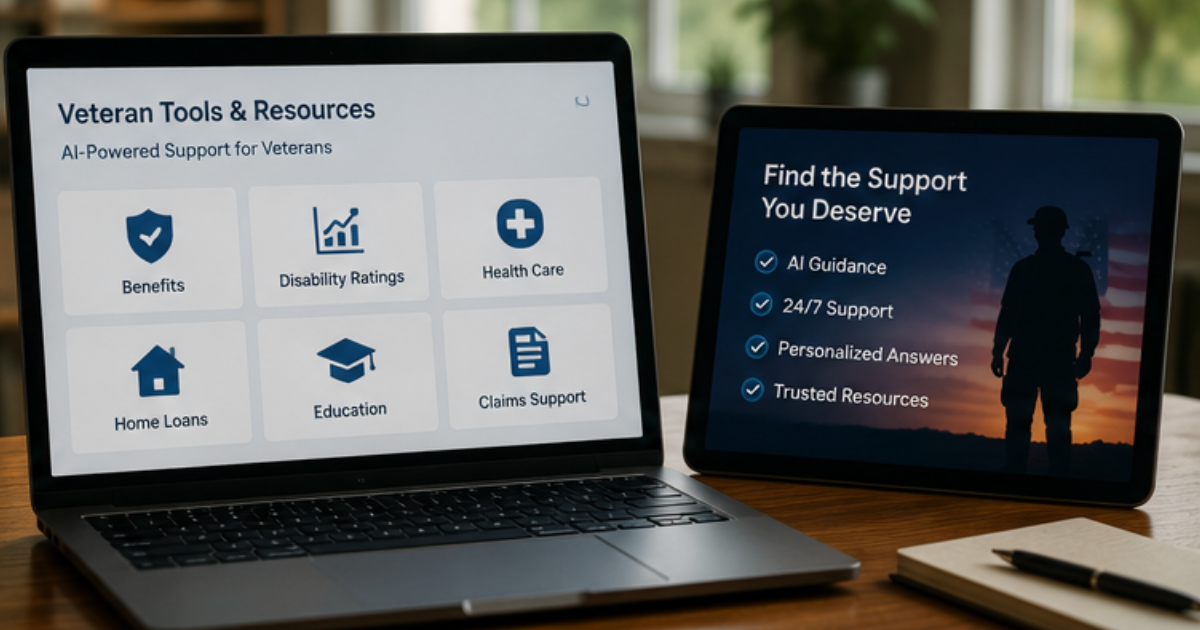
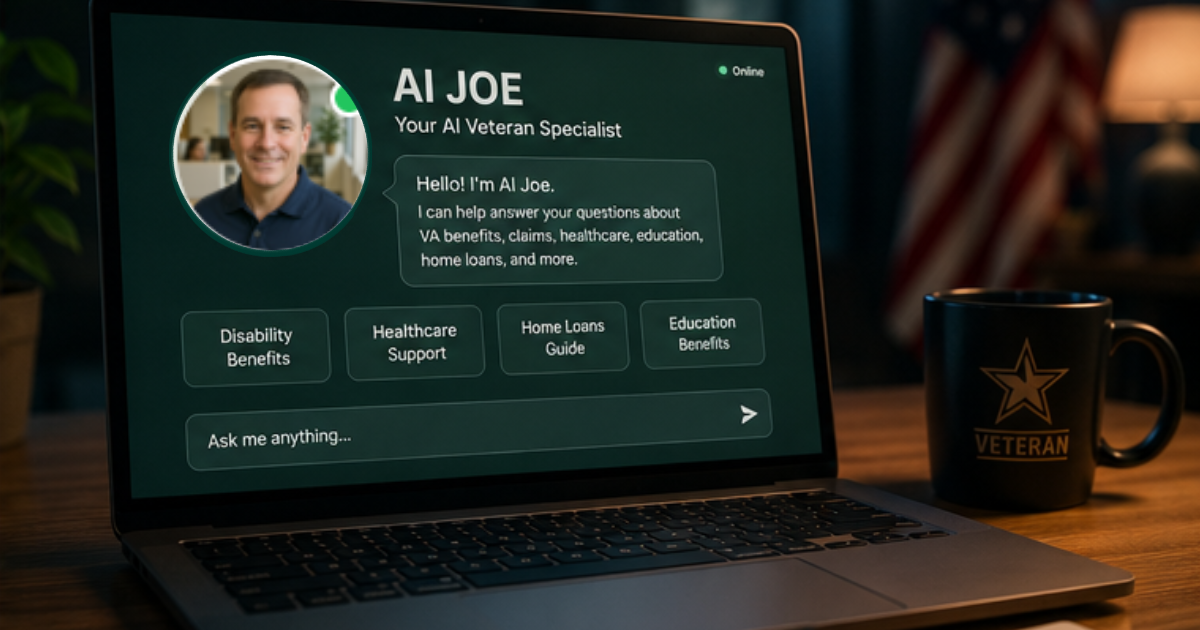
     

  • How a Simple Tool Helped Me Understand My BAH — A Veteran’s Story

    How a Simple Tool Helped Me Understand My BAH — A Veteran’s Story

    I was sitting at my kitchen table, a stack of lease agreements beside me, staring at the screen of my laptop, feeling exactly like most other Veterans do at some point — confused, uncertain, and squeezed by numbers that don’t make sense.

    It was early spring, and I was getting ready to move. New job, new city, new expectations — and one thing gnawing at me more than anything: housing costs. How much could I realistically afford? How much would my Basic Allowance for Housing (BAH) actually cover? I had heard about BAH in trainings and briefings, but never truly understood how it worked in real life.

    I tried reading government pages, skimmed VA PDFs, and even asked a few friends. But nothing clicked — until I found the VA.org BAH Calculator.

    That day began a shift — not dramatic fireworks or “aha” moment, but the kind of quiet clarity that only comes when something finally makes sense.

    What BAH Is & Why It Matters

    For Veterans and service members, BAH is one of those acronyms that floats around in briefings and benefit handbooks. You know it has to do with housing, but how much? Does location matter? What about pay grade and dependents?

    Basic Allowance for Housing (BAH) is designed to help cover housing costs when you are not living in government quarters. The tricky part is that BAH isn’t one number — it changes based on:

    • Your location (ZIP code)

    • Your pay grade

    • Whether you have dependents

    That’s a lot of variables and, if you’re like me, that starts to feel like algebra without a calculator.

    Finding the VA.org BAH Calculator

    One evening, after rereading a rental agreement for the third time, I typed “how much housing allowance will I get as a Veteran” into a search bar. The first few results were confusing or outdated. Then I clicked a link — reliable, clear, labeled VA.org BAH Calculator.

    No login. No forms to fill out. No sales pitch. Just a tool with a few boxes:

    • ZIP code

    • Pay grade

    • Number of dependents

    I typed in my details and hit “Calculate.”

    Seeing the Numbers in Black & White

    Within seconds, the calculator spit out a number — not some rough guess, not “about this much,” but a clear BAH amount tied to my exact situation.

    I remember sitting back and exhaling.

    Suddenly, it wasn’t all guesswork anymore. I could see:

    • What my monthly housing allowance would be

    • How it compared to the apartments I was considering

    • Whether I needed a roommate or could go solo

    • What neighborhoods were actually realistic for my budget

    For the first time since planning this move, I felt in control.

    How I Used My BAH Estimate to Plan

    Armed with the calculator’s result, I began to make concrete decisions:

    • I narrowed my apartment search to a specific price range

    • I budgeted confidently for utilities and groceries

    • I scheduled viewings in areas close to work and within BAH coverage

    • I avoided rental options that would stretch me too thin

    Instead of guessing and hoping, I was planning with data.

    Why This Tool Helps Other Veterans Too

    The VA.org BAH Calculator isn’t just useful for someone moving to a new city — it’s helpful for:

    Budget planning

    Veterans can project income versus housing costs — before signing a lease.

    Comparing locations

    Different ZIP codes = different housing allowances. Now you can compare with real numbers.

    Family planning

    Dependents affect BAH — and long-term housing decisions.

    Career choices

    Whether relocating for a job or considering remote work, housing costs become a clear factor.

    This kind of clarity changes how you plan. It removes the vague stress of “maybe” and replaces it with the confidence of “I know.”

    Final Thoughts

    I never thought a simple online tool could make such a difference. But when you’re planning your home — your life — after service, having accurate information matters.

    The VA.org BAH Calculator didn’t just give me a number. It gave me confidence.

    It’s not glamorous. It’s not flashy. But it’s practical, clear, and Veteran-centered — and that’s exactly what helping Veterans looks like.

    If you’re planning housing, relocation, or just trying to understand your benefits more clearly — start with your BAH estimate. It may just be the first step toward a more confident plan.


  • VA Disability Rating Estimator for Veterans: How It Works and Why It Matters

    VA Disability Rating Estimator for Veterans: How It Works and Why It Matters

    Understanding your VA disability rating can feel overwhelming. Veterans often receive their rating decision letters and wonder “How did they arrive at this number?” or “Am I missing something that could increase my rating?” This is where the VA Disability Rating Estimator becomes a useful and empowering tool. The VA Disability Rating Estimator is designed to help Veterans get a clearer sense of how disability ratings may be calculated before they file a claim or appeal. It’s not an official VA decision, but it gives you a way to estimate how individual conditions and combinations of conditions might be rated. Let’s explore how this tool works, what it can and cannot do, and why it can be so helpful as part of your benefits planning.

    Why Disability Ratings Matter

    A VA disability rating represents the severity of a Veteran’s service-connected condition. Ratings determine:

    • Monthly compensation amounts
    • Eligibility for additional VA benefits
    • Priority considerations for certain programs

    Even small differences in ratings can significantly affect monthly compensation, health care support, and eligibility for other benefits. That’s why understanding how the rating is calculated matters.

    What Is the VA Disability Rating Estimator?

    The VA Disability Rating Estimator is an online tool that allows Veterans to enter information about their medical conditions and receive an estimated disability rating based on VA rules and formulas. This estimator:

    • Lets you input multiple service-connected conditions
    • Applies VA rating criteria to calculate likely combined ratings
    • Helps visualize how combined conditions may interact
    • Presents an estimate — not an official VA rating

    The tool is designed to give Veterans clarity and insight, especially before filing a claim or pursuing an appeal.

    How the Estimator Works

    When you use the VA Disability Rating Estimator:

    1. You list service-connected conditions you want to evaluate.
    2. For each condition, you choose associated symptoms or severity indicators.
    3. The tool applies the VA’s standard rating formulas — including the “combined ratings” method — to generate an estimate.

    The VA does not simply add percentages together. Instead, it uses a combined rating table that accounts for how multiple disabilities are weighted. This estimator approximates that process so you can see a realistic estimate.

    What the Tool Can and Cannot Do

    It’s important to understand both the value and the limits of the estimator: What it can do

    • Provide a reasoned estimate of disability ratings
    • Show how multiple conditions may combine
    • Help identify potential missing symptoms to document

    What it cannot do

    • Replace the official VA rating decision
    • Guarantee any specific outcome
    • Submit a claim or appeal on your behalf
    • Account for all individual medical complexity

    Think of this tool as a preparation aid, not a decision maker.

    Why Using the Estimator First Helps

    Veterans who use the estimator before filing a claim often feel:

    • More informed about what to expect
    • Better prepared to describe their conditions clearly
    • Less surprised by initial rating decisions

    In some cases, using the estimator can help you spot conditions or symptoms you may want to document more thoroughly before submitting your claim. That preparation can reduce back-and-forth with VA and help you build a stronger case from the start.

    A Veteran’s Perspective: Planning Ahead

    Consider this real-world example (anonymized for privacy): Veteran A had two service-connected conditions: back pain and tinnitus. After using the estimator, he realized his combination of symptoms could yield a higher combined rating than he initially thought. He then added more detailed medical evidence to support daily limitations and functional impact. When he filed his claim, his initial rating was closer to his expectations — saving months of rework. This shows that even if the tool doesn’t guarantee a specific rating, it helps guide Veterans toward better preparation.

    Tips for Using the VA Disability Rating Estimator

    • List all relevant conditions — even minor ones matter in combination.
    • Be honest and specific about symptoms and limitations.
    • Keep medical records handy when conducting your estimate.
    • Use the estimate as a discussion guide with your doctor or VA representative.

    Remember, the clearer the evidence and description you provide, the more accurate your eventual rating is likely to be.

    What to Do After You Get Your Estimate

    Once you’ve used the estimator:

    • Compare it with your actual rating decision (if you already filed) 
    • Use it as a roadmap when preparing or updating claims 
    • Discuss findings with your VA doctor or representative 

    If there’s a gap between your actual rating and the estimate, you may consider follow-up actions such as supplemental claims or appeals — but always with documented evidence.

    Final Thoughts

    The VA Disability Rating Estimator for Veterans is a powerful insight tool that helps demystify how ratings might be calculated before you file a claim. It’s not a replacement for the official VA process, but it gives you knowledge and confidence before you take action. Preparation is empowering — and this estimator is one tool that can help you better understand your situation, set realistic expectations, and approach your VA disability claim with clarity. Use the tool, gather evidence, and plan your next steps with confidence.